
Old Town
Pedestrian Zone Shortlist
About
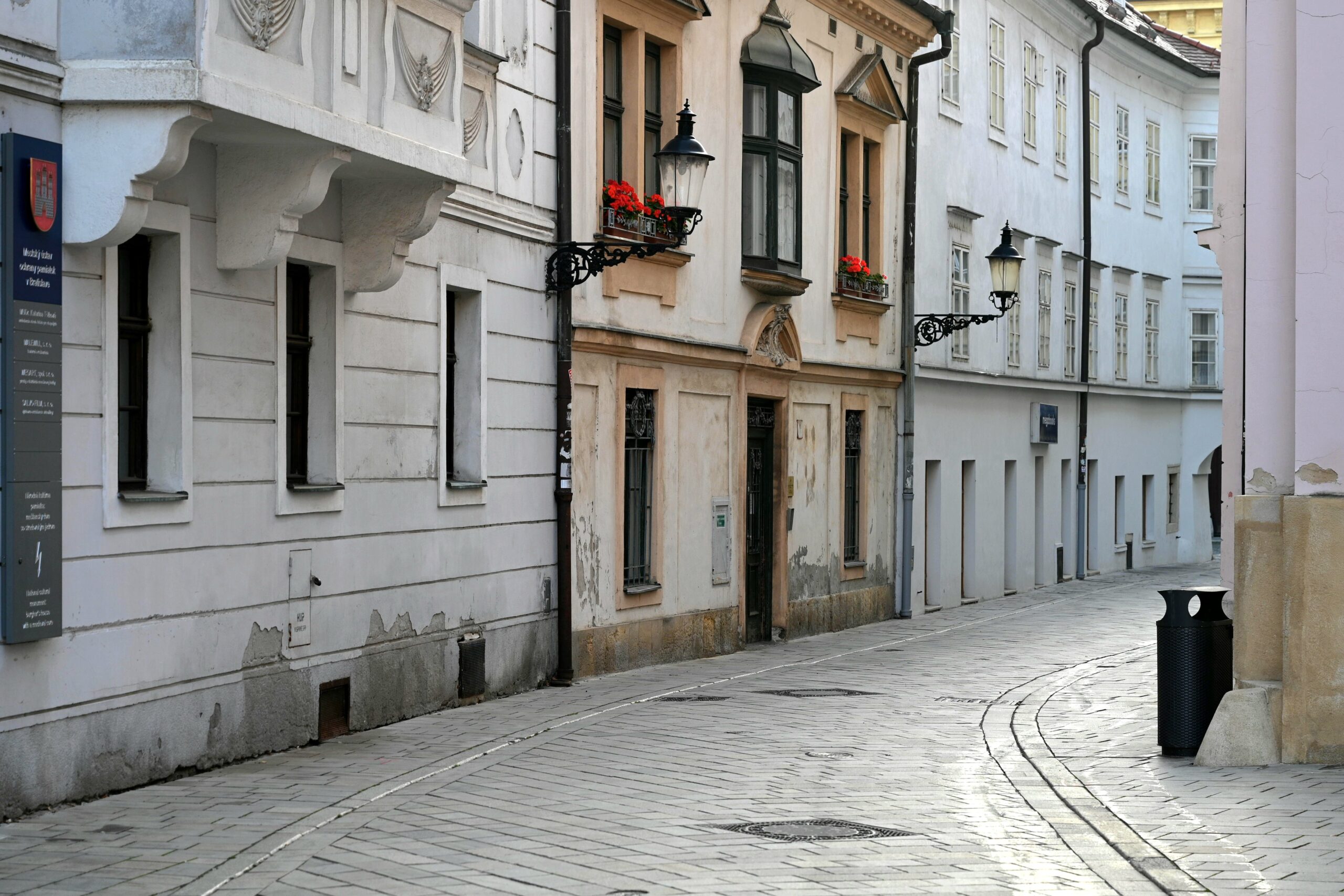
Although the boundaries of Bratislava’s first district, known as the Old Town, stretch far beyond the pedestrian zone and encompass centuries of history and heritage, this text will focus solely on the core area—a tourist’s first stop, which alone requires ample time to explore. Specifically, we will focus on the area bordered by SNP Square to the north, Hviezdoslav Square to the south, and Staromestska Street to the west—in other words, the inner city once protected by the Medieval City Walls.
The walls were a defining factor of the inner city’s layout. The main routes originated at the only possible entry points through the walls—the city’s four gates. Michalska Street runs through the Old Town from Michael’s Gate in the north, continuing as Venturska Street, and ending at Panska Street, the primary route leading from the former Vydrica Gate at the southeastern edge of the walls. Panska Street traces the city’s historic southern border, continuing westward into Laurinska Street, which once led to Laurinc Gate. After the fourth gate, Fishermen’s Gate, was added to the southern wall, a route passing through the market (now the Main Square) gained prominence, connecting Michalska Street with the junction of Panska and Laurinska Streets. These three thoroughfares remain the backbone of the Old Town’s street structure today.
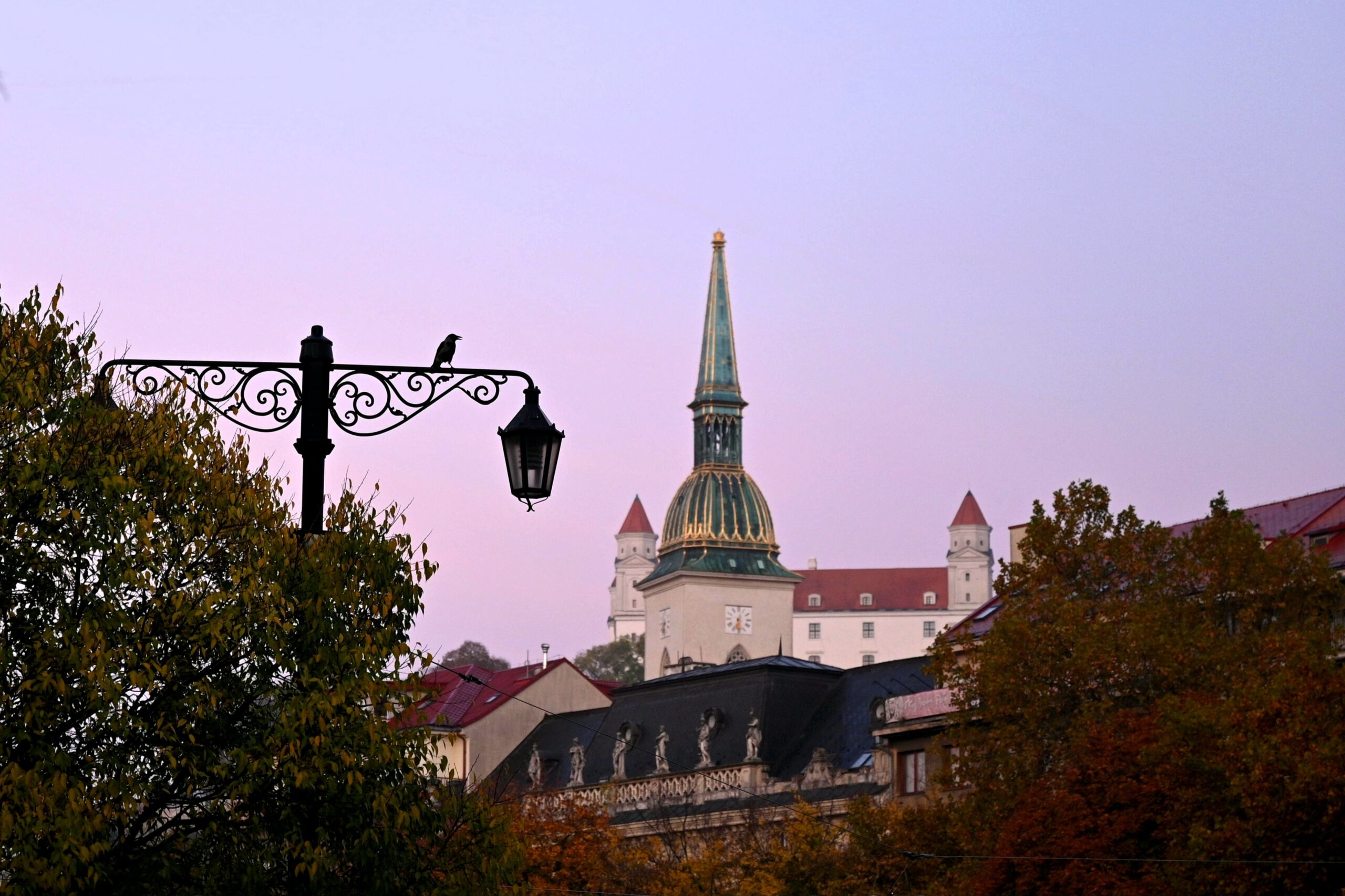
Bratislava’s history dates back long before the construction of its walls in the 13th century. The settlement, founded at the foothill below Bratislava Castle, is first mentioned in written records from 907 A.D. The main road running through this settlement, connecting the castle with the ford across the Danube, is what we now call Kapitulska Street. Over time, this area, once the heart of the settlement, became the religious center of the Roman Catholic Church in the city. The street is crowned by St. Martin’s Cathedral, a symbol of the city’s religious and political heritage, and today remains one of the oldest, most romantic, and best-preserved streets in Bratislava. It is also an entry point to the only preserved element of the City Walls, the western part.
Logistics
- Korzo, Bratislava
- Non-stop
- Free of charge
- Explore the sights, but also enjoy the Old Town's laid-back atmosphere.
Tips
Nearby restaurants
The streets of Bratislava’s Old Town are filled with coffee shops, bars, and restaurants to suit every taste. On Laurinská Street near the Nedbalka Gallery, you’ll find the quality Thai restaurant SOHO, the informal and relaxed Urban House, and the popular coffee shop Mondieu. From the Main Square, you can visit the Dubliner Irish Pub or the Barrock Pub on Sedlárska Street, or explore the numerous options on Panská Street and Hviezdoslav Square, including including two Gatto Matto restaurants, and the beautifully designed Zylinder, which evokes the elegance of Emperor Franz Joseph’s era. For an upscale dining experience with stunning views of the cathedral and the Old Town, consider visiting the Sky Bar & Restaurant. For traditional Slovak cuisine, head to the Flagship Restaurant on SNP Square, just outside the pedestrian zone, or indulge in festive treats at the Christmas Market, held every December on the Main Square and Hviezdoslav Square. If you’re looking to slow down and unwind, step into the Mirbach Palace, where you’ll find Emil, a delightful coffee shop with seating options both indoors and in a charming, cozy atrium.
Things to do nearby
During your sightseeing tour, you will undoubtedly discover the charm of Kapitulska Street, and the lively atmosphere of Michalska, Venturska, Panska, and Laurinska Streets, as well as the central area around the Main Square. To tailor your tour to your interests, choose from a shortlist of sights and activities organized into categories below.
First, let’s explore the architectural must-sees of Bratislava’s Old Town: St. Martin’s Cathedral, the coronation church of Hungarian kings and queens for centuries; the Old Town Hall, a complex of buildings including the 14th-century tower on the Main Square, which hosts a museum that tells the story of Bratislava; Michael’s Gate, the only remaining Medieval gate, complete with its tower and barbican; and the Primate’s Palace, home to unique English tapestries and the site where the Peace of Pressburg was signed in 1805 between France and Austria.
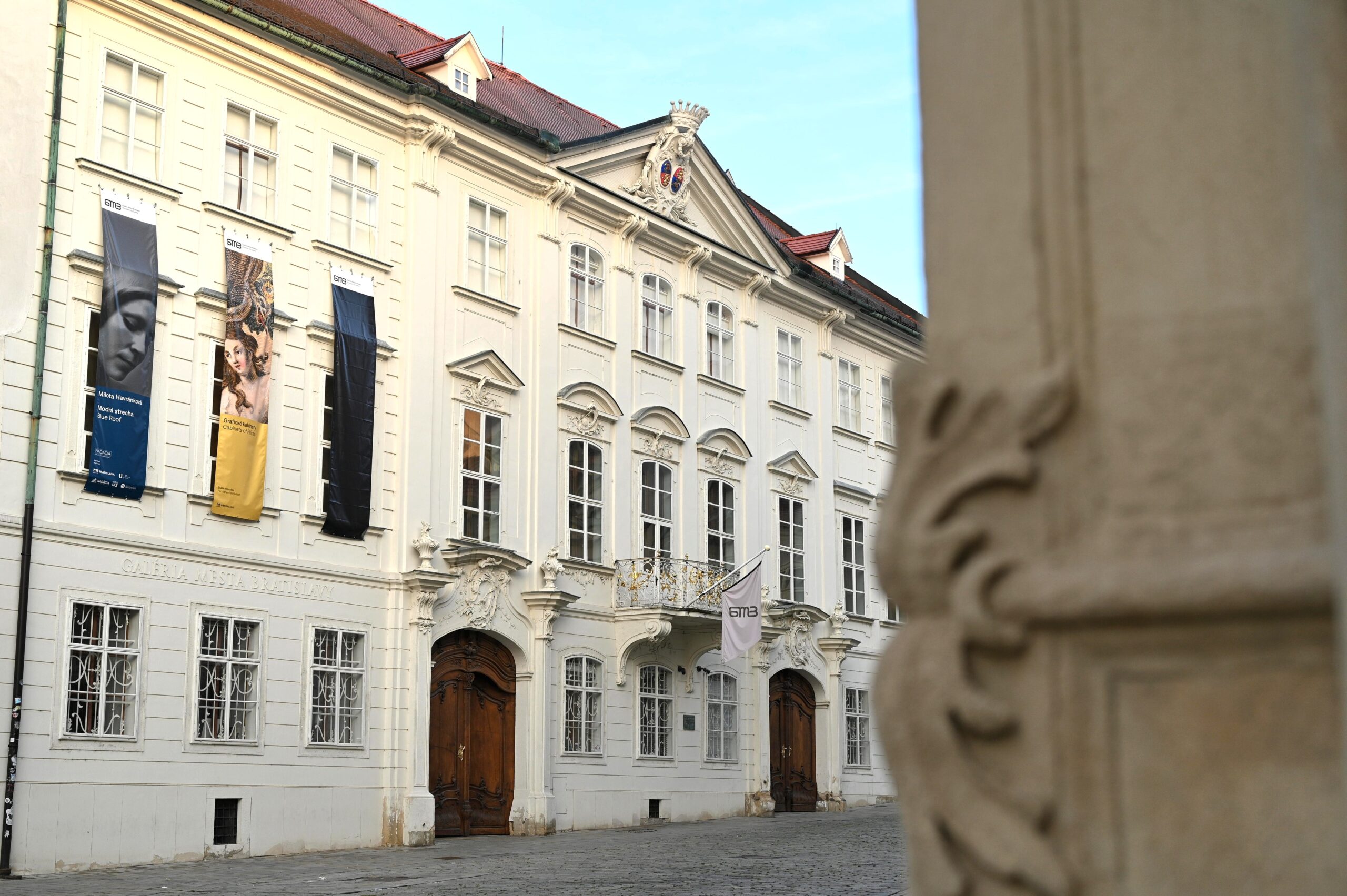
Second, the Old Town offers several gallery venues that feature both historic and contemporary artworks. The Mirbach Palace houses the City of Bratislava Gallery, which showcases valuable Gothic panel paintings and wooden sculptures, along with beautiful graphic cabinets displaying 17th and 18th century works, as well as temporary exhibitions. On the other side, the Nedbalka Gallery presents some of the finest paintings and sculptures created in Slovakia from the 19th to the 21st centuries. Just steps from the pedestrian zone, on the Danube waterfront, you’ll find Slovakia’s flagship art collection, the Slovak National Gallery.
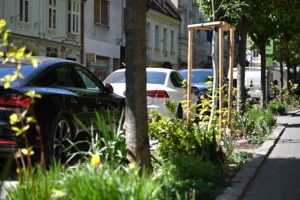
Third, experience the city through its relaxed atmosphere. Stroll along the charming cobblestone streets, sit on a bench and soak up the sun, enjoy your favorite drink in one of the many coffee shops, premium wineries, or choose a cozy restaurant to recharge. As the day winds down, wait for the sunset to reveal the Old Town’s vibrant nightlife. In Bratislava, ‘Korzo’ (the Slovak word for promenade) captures the essence of a leisurely walk, where locals take time to enjoy a drink, savor a meal, meet friends, and engage in friendly conversation.
Finally, some of Bratislava’s most fascinating sights lie just beyond the Old Town’s pedestrian zone. Discover the majestic Bratislava Castle and the charming streets leading to it, the vibrant Danube Waterfront, the Grassalkovich Palace and Garden, the solemn Slavin Memorial, and the Chatam Sofer Memorial. This site honoring the influential Rabbi and founder of the renowned Pressburg Yeshiva preserves a small part of what was once a historic Jewish Orthodox cemetery.
The list below highlights some of the most popular tourist sights. Click on any of them to discover additional attractions in their immediate vicinity. Alternatively, explore lists organized by key themes or itineraries offering ideas for your sightseeing routes.
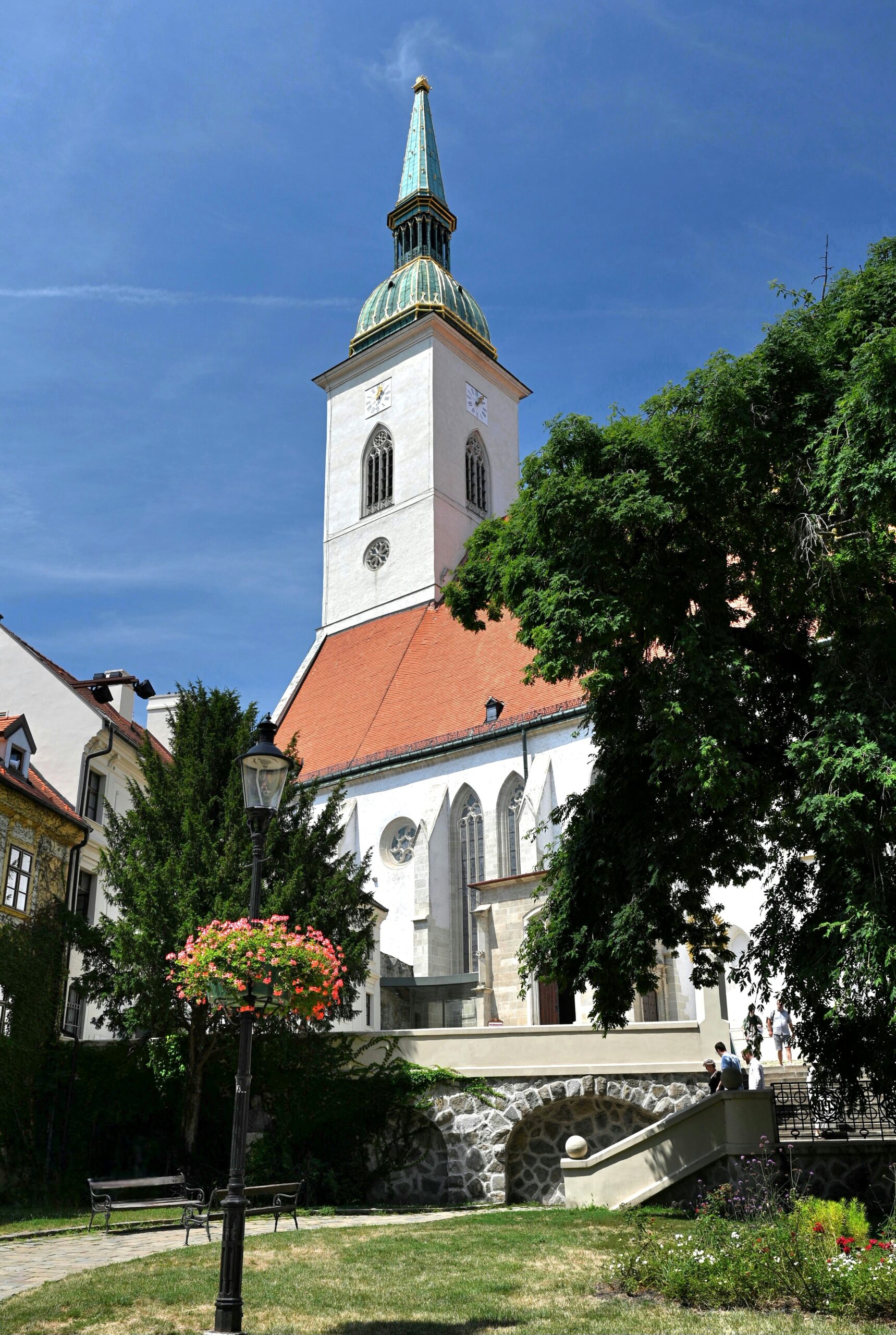
For centuries, the St. Martin’s Cathedral was playing a key religious and political role in Central Europe, as the coronation church of kings and queens of the Hungarian Kingdom, including famous Maria Theresa. The construction of this beautiful Gothic building was initiated in 1311 A.D. and finalized two centuries later. The 85-meter-high tower houses houses six bells, including a 2.5-ton Wederin, dating back to 1674, as well as a 150-kilogram golden-plated model of the Hungarian royal crown.
During the Middle Ages, Bratislava’s massive City Walls played an important defensive role. The inner city was only accessible through three main fortified gates, and later a smaller one in the Danube direction. The Michael’s Gate featuring an iconic tower is the only one that survived until today. As the walls’ relevance decreased after the defeat of the Ottoman forces in the 18th century, their large part was destroyed to allow the city’s further expansion. Travel back in time by entering the preserved part of the walls through a bridge connecting it with the Castle Hill, a gate opposite to the St. Martin’s Cathedral, or a passage from Kapitulska Street. The Walls are open every day of the week.
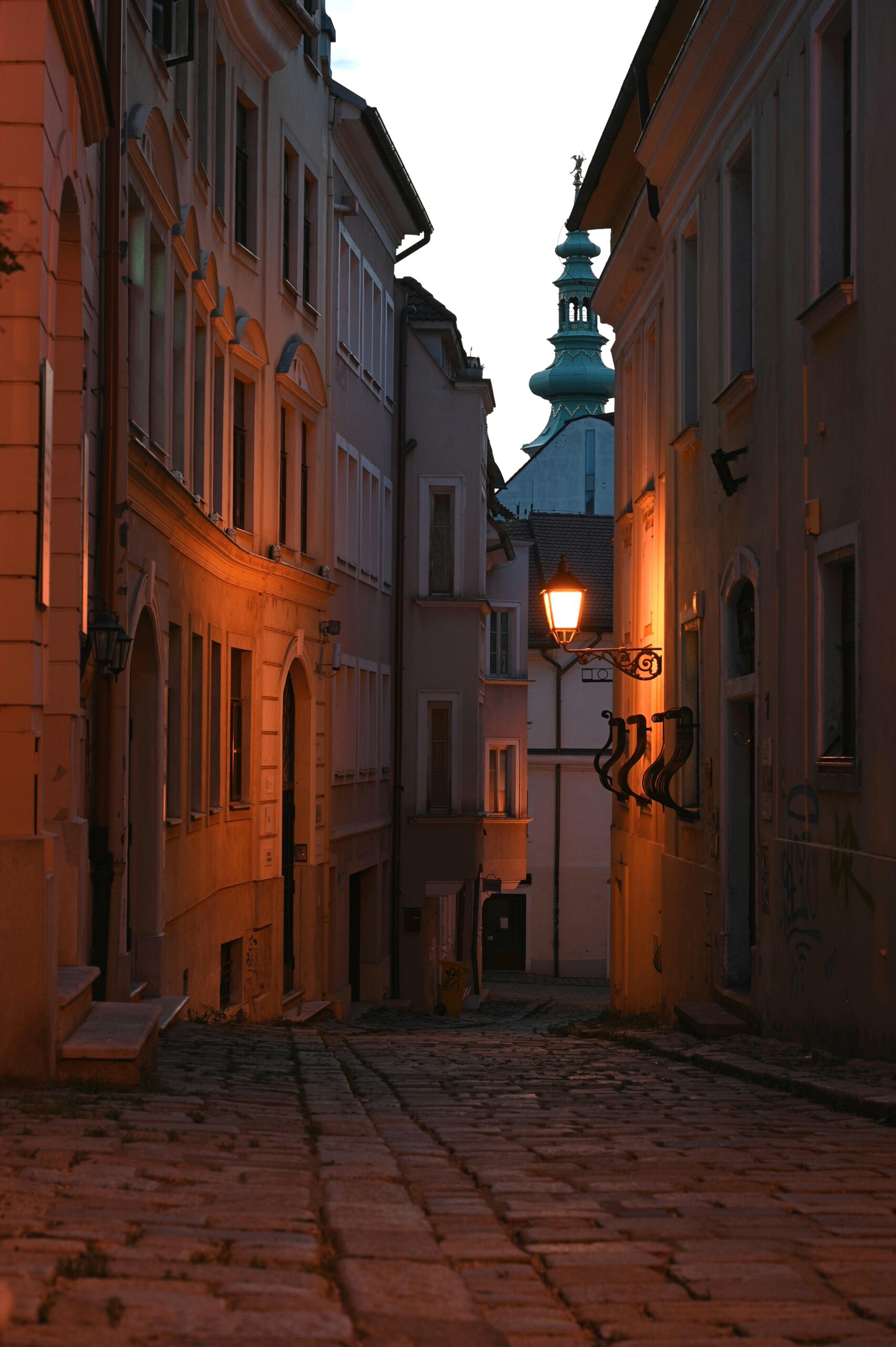
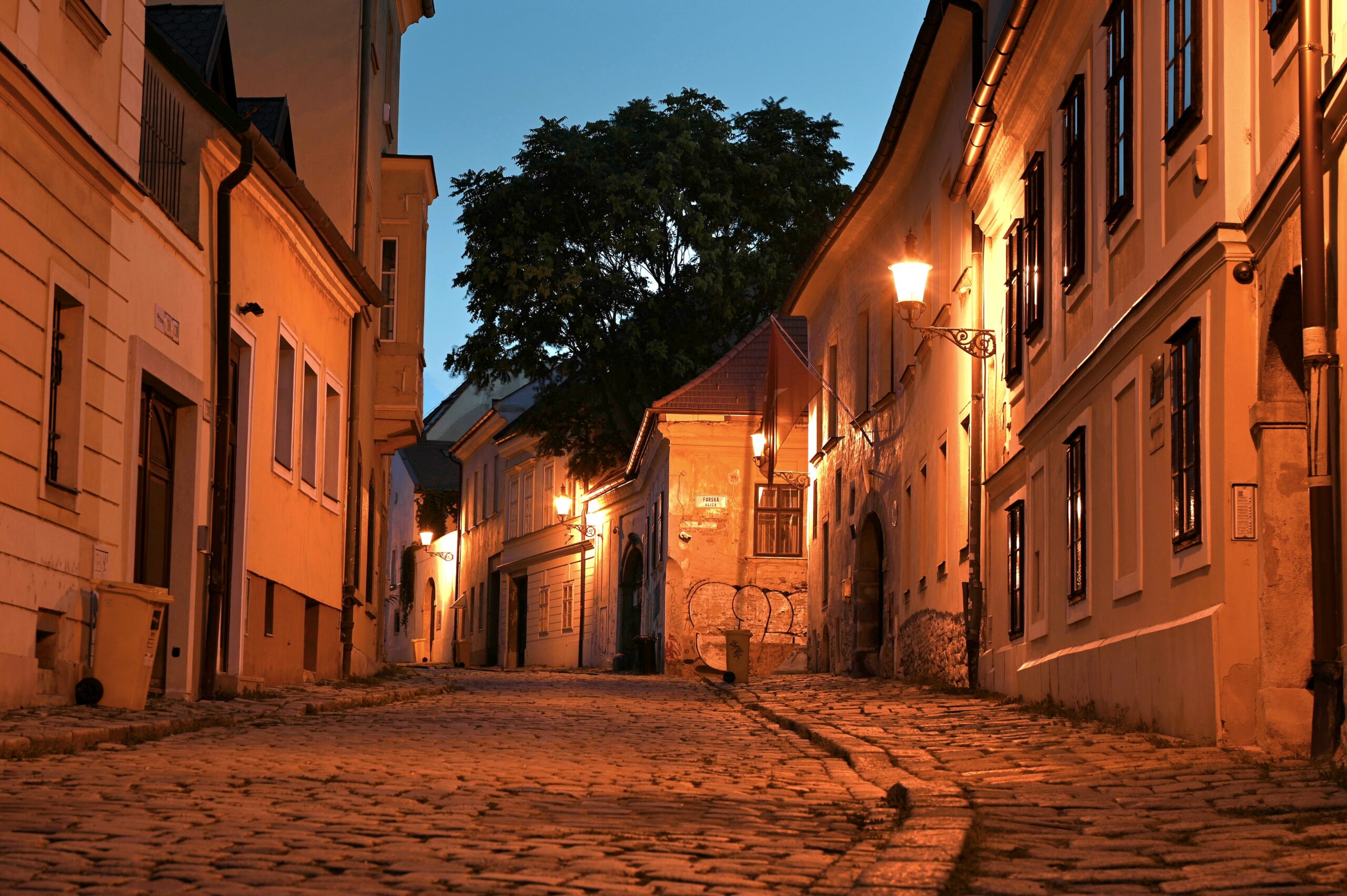
Kapitulská Street is one of the oldest streets, predating the establishment of the city in the 13th century. It has long been home to Roman Catholic institutions, including the Faculty of Theology and Seminary, the Bishops’ Conference of Slovakia, a parish office, Premonstratensian nuns, a youth center, and Catholic radio and newspapers. This picturesque cobblestone-paved street, with its passages leading to the City Walls, remains one of the quietest and most romantic spots in the Old Town.
Michael’s Gate is the only preserved gate from the medieval fortifications of Bratislava. It was built in the 13th century and served as a part of the city’s fortifications. The tower offers stunning views of the Old Town and is one of the most recognizable landmarks in Bratislava. Don’t miss out on the opportunity to snap a photo with this iconic gate! Besides the tower, be sure to visit the Red Crayfish, a small Museum of Pharmacy located within the Gate’s barbican.
This 18th century Rococo building has been hosting the Gallery of Bratislava since 1975. Its permanent exhibition installed on the first floor of the Mirbach Palace includes beautiful sacred paintings and sculptures, mostly representing Gothic and early Renaissance art. The oldest Medieval artifact, a wooden sculpture of madonna, probably dates back to the 13th century. The second floor features a selection of Central European Baroque art of the 18th century, including Franz Xaver Messerschmidt’s works Capuchin and Character Heads. The palace also houses a nice coffee shop, Emil.
The Main Square, the beating heart of the Old Town, is a key crossroads and a picturesque spot begging to be photographed. Dominated by the tower of the Old Town Hall, the square is surrounded by charming cafés, bars, and restaurants. It also transforms into the site of a traditional Christmas market during the Advent season. The square’s history dates back to 1373, when it was first mentioned in writing as Forum (the market). At its center stands the Renaissance-style Maximilian Fountain, also known as the Roland Fountain, built in 1572 on the site of an old well. The fountain was commissioned by and named after Holy Roman Emperor Maximilian II, who was crowned King of Hungary in St. Martin’s Cathedral.
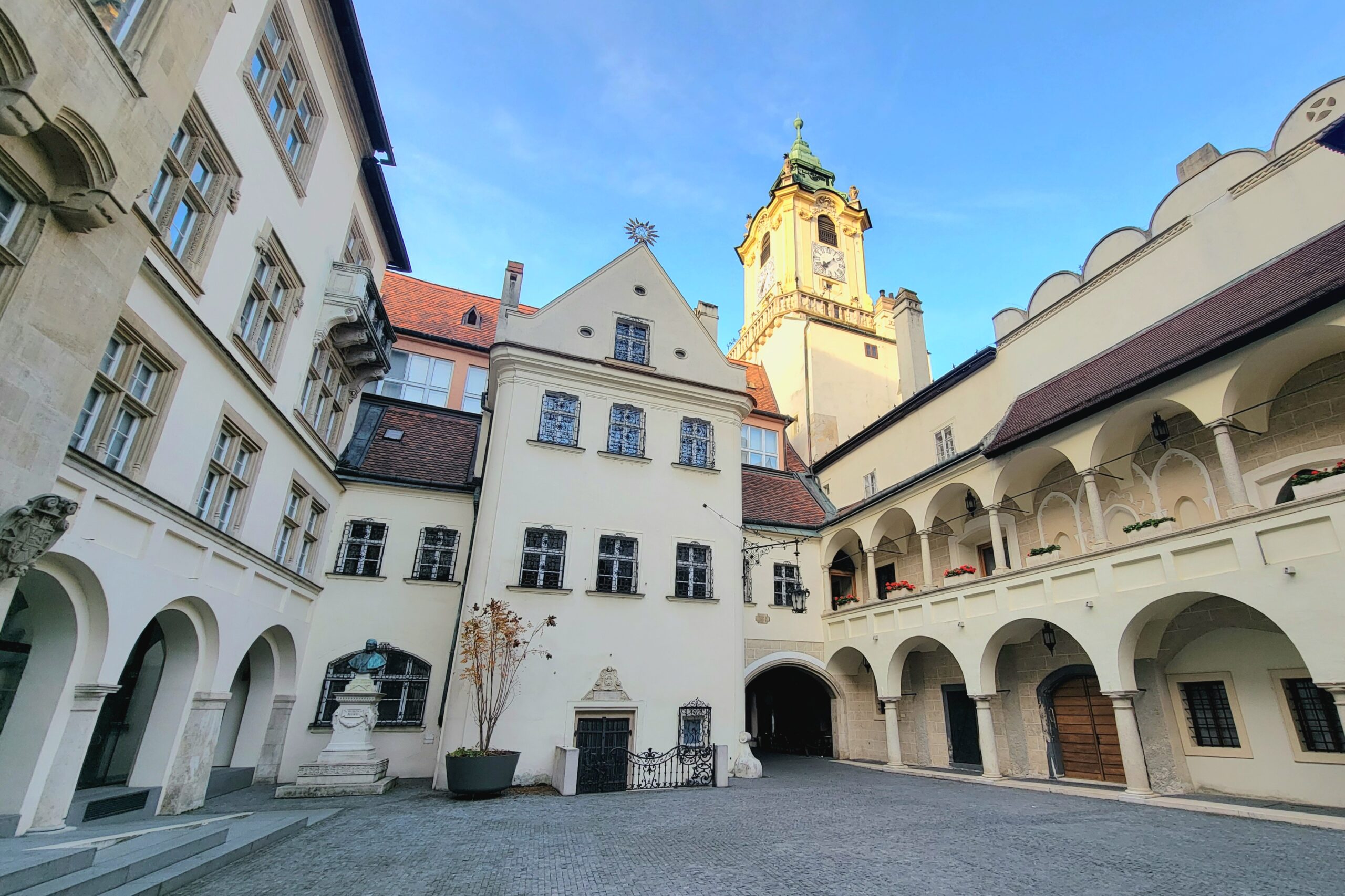
A beautiful complex of the Old Town Hall, built from the 14th to the early 20th centuries, showcases Gothic, Renaissance, Baroque, and Modern architectural styles. Since 1868, it has been housing the City Museum of Bratislava, making it the oldest museum in Slovakia. The permanent exhibition highlights the historic premises, decorations, and artifacts, guiding visitors through the city’s rich and fascinating history. Be sure to climb to the top of the medieval tower for a picturesque view of the Main Square, and don’t miss the wine cellars and the viticulture exhibition located in the adjacent Apponyi Palace.
This luxurious residence of the Primate, the Archbishop of Esztergom, was built in 1781 behind the Old Town Hall, on a square that once served as a meat market. In December 1805, the Peace of Pressburg (now Bratislava) was signed in the palace’s Mirror Hall, following the Battle of Austerlitz. The treaty, negotiated between Austria and France, led to the dissolution of the Holy Roman Empire and is commemorated through the Rue de Presbourg in Paris. The Primate’s Palace houses six exquisite English silk-and-wool tapestries from the 1630s, depicting the ancient tale of Hero and Leander, woven at the Royal Mortlake Tapestry Works. Its courtyard features a striking fountain of St. George battling the dragon.
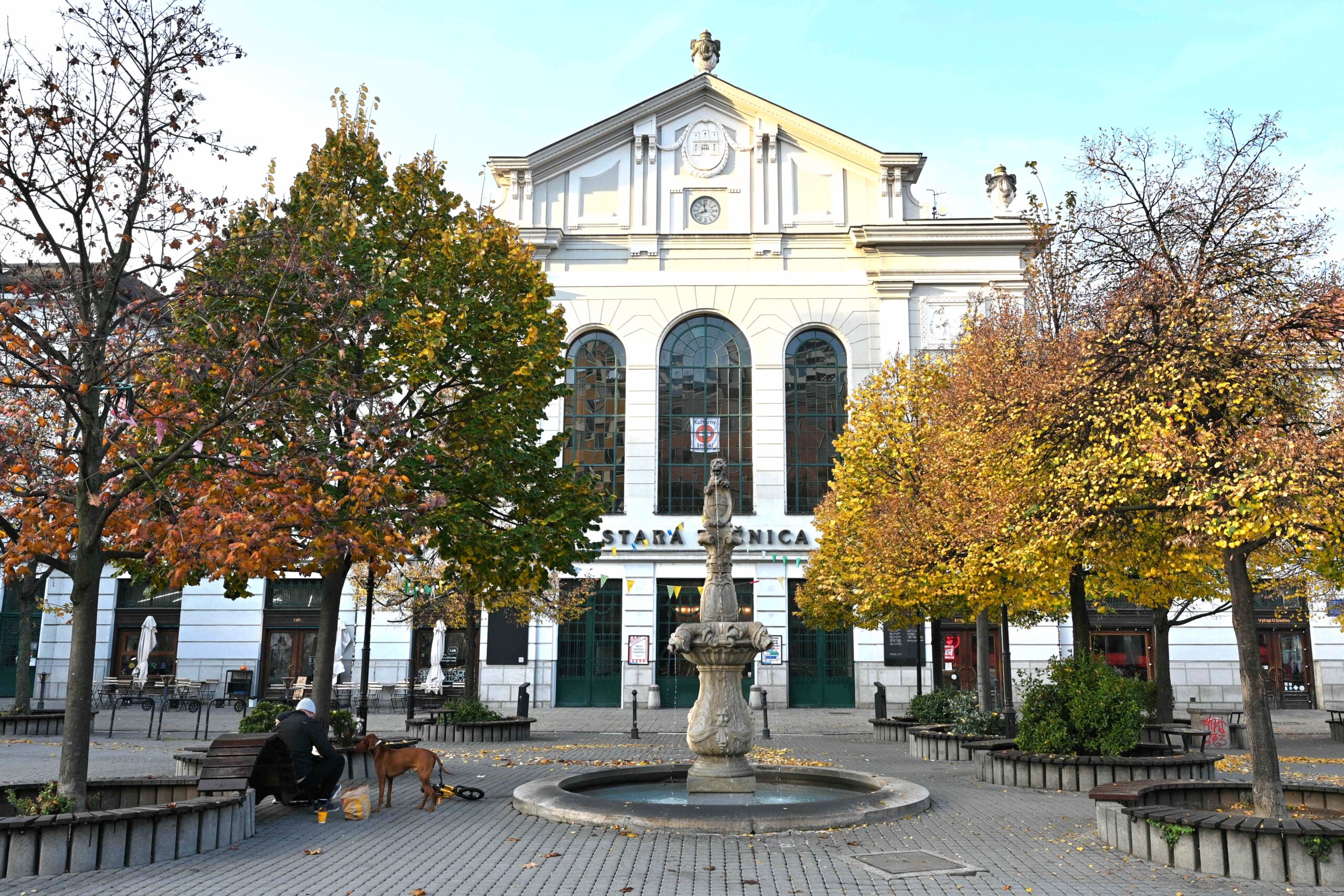
A small private gallery showcasing the works of Slovakia’s finest painters and sculptors from the late 19th century to the present day. Situated on Nedbalova Street, between the Primate’s Palace and the Old Market Hall, it offers the perfect opportunity to slow down and appreciate modern art. The experience is further enhanced by the building itself—a stunning cultural monument with four levels of galleries encircling a central open space.
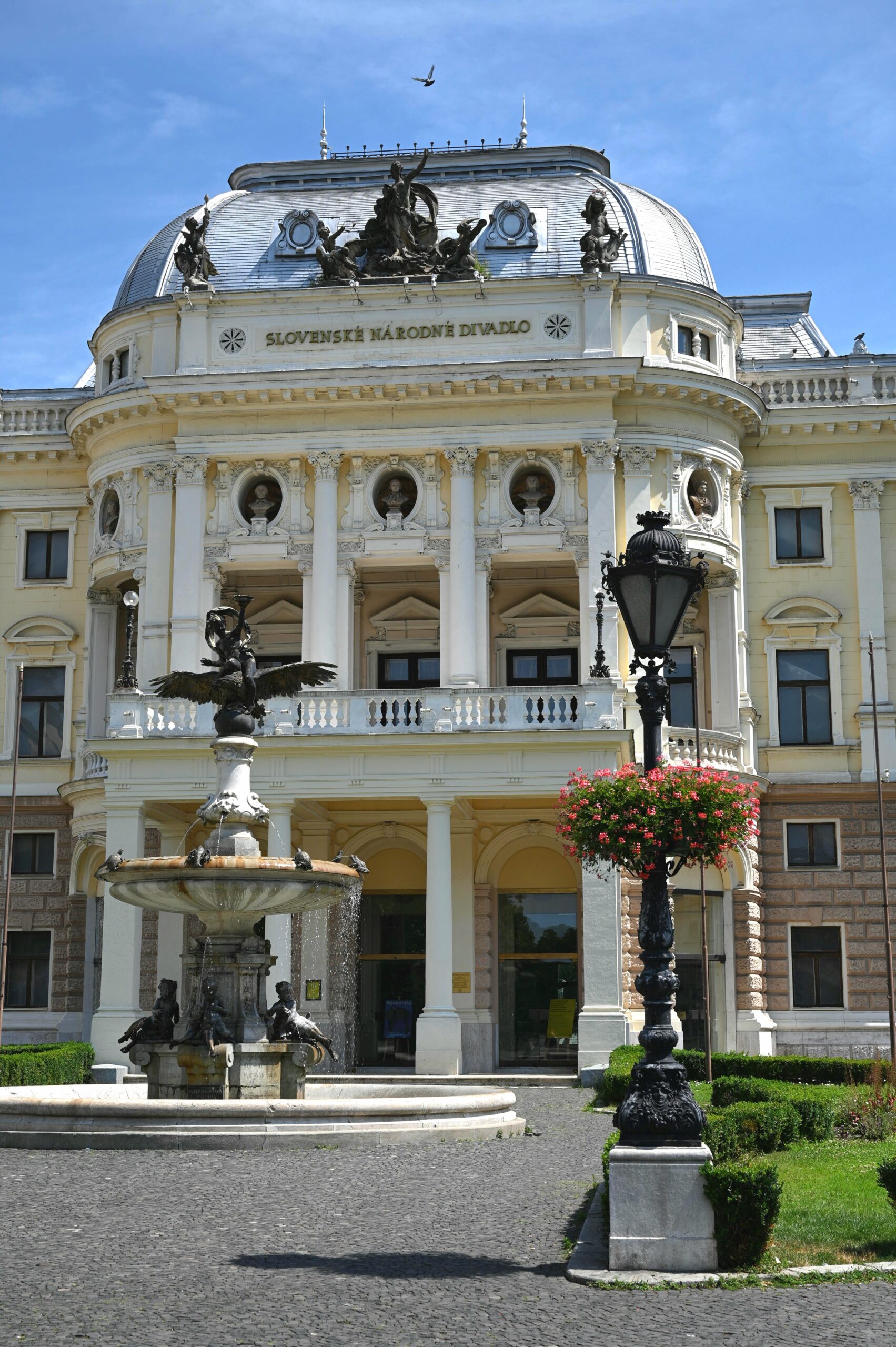
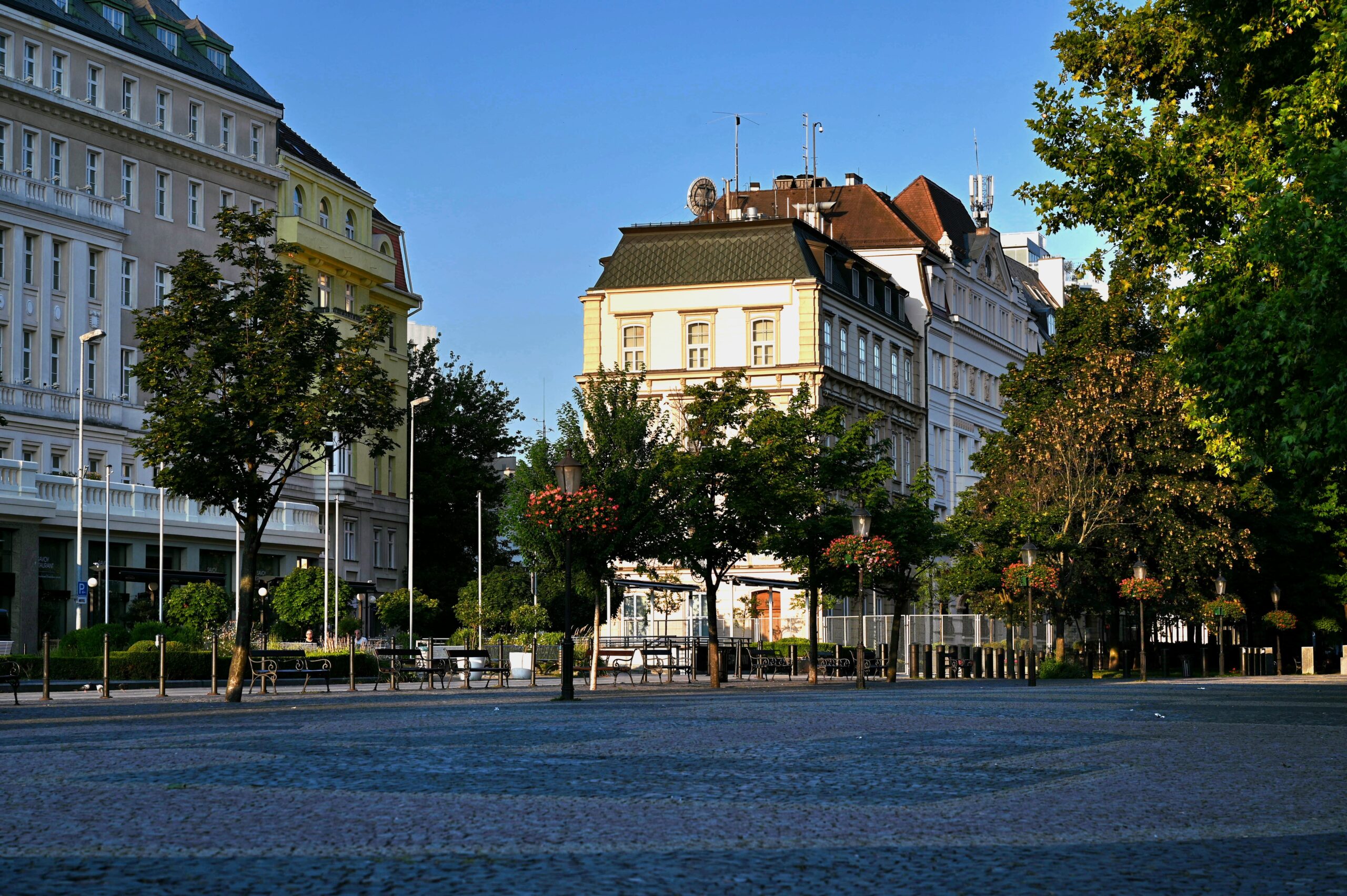
A sprawling promenade shaded by old trees and lined with numerous bars and restaurants, Hviezdoslav Square is one of Bratislava’s must-see attractions. Beautiful palaces on both sides recall the era when this area was home to wealthy nobility. Notable landmarks include the historic Slovak National Theatre building and the Carlton Hotel, which once hosted prominent figures such as Maria Theresa, Jules Verne, Albert Einstein, Alfred Nobel, Franklin D. Roosevelt, Thomas Edison, and Franz Liszt. The square features several fountains, a grand statue of one of Slovakia’s most significant poets, Pavol Orszagh Hviezdoslav, and various smaller statues. It culminates at Rybne Square with its 1713 Plague Column.
The Historical Building of the Slovak National Theatre, designed by Vienna-based architects in an eclectic style, first opened its doors in 1886 as a city theater. It became the home of the Slovak National Theatre upon its founding in 1920 and served this role throughout the 20th century. Currently, the building is not in use and awaits much-needed general reconstruction. Despite this, it remains a prominent feature of Hviezdoslav Square, graced by the beautiful fountain depicting the mythological tale of Ganymede.
The construction of this stunning eclectic building, blending elements of Baroque, Rococo, and Art Nouveau, was completed in 1919. After World War II, the Reduta was designated as the home of the Slovak Philharmonic, serving as its seat and main stage ever since. The large concert hall, with a capacity of 700 seats, showcases a magnificent Rieger pipe organ installed in 2011 during the building’s general reconstruction. Experience Bratislava through the timeless beauty of classical music performed by one of Europe’s finest philharmonic orchestras!
The Slovak National Gallery (SNG) serves as a gateway to Slovakia’s and Europe’s artistic heritage and contemporary creativity. Its vast collection, encompassing nearly 90,000 artworks, includes remarkable examples of sacred sculptures and paintings from the Gothic and Baroque eras, alongside modern and contemporary pieces. Step into SNG’s freshly renovated main building at the waterfront to explore captivating permanent and temporary exhibitions! The gallery also features a small book shop, a coffee shop, and a cinema hall.
One of Europe’s oldest pharmacies, Salvator was established by the Jesuit College after their arrival in Bratislava in the first half of the 17th century and was formally founded by Archbishop Georgius Lippay around 1658. Originally located in a building opposite the northern entrance to the Cathedral on Kapitulska Street, the pharmacy moved in the 1830s to the Csaky Palace, south of the Cathedral on Panska Street, and eventually, in 1904, to a neighboring building where it still operates today. Visitors can admire the original Baroque furniture from the 1720s and a grand marble table dating back to the first half of the 17th century.