
Michael’s Gate
Entrance to the Medieval City
About
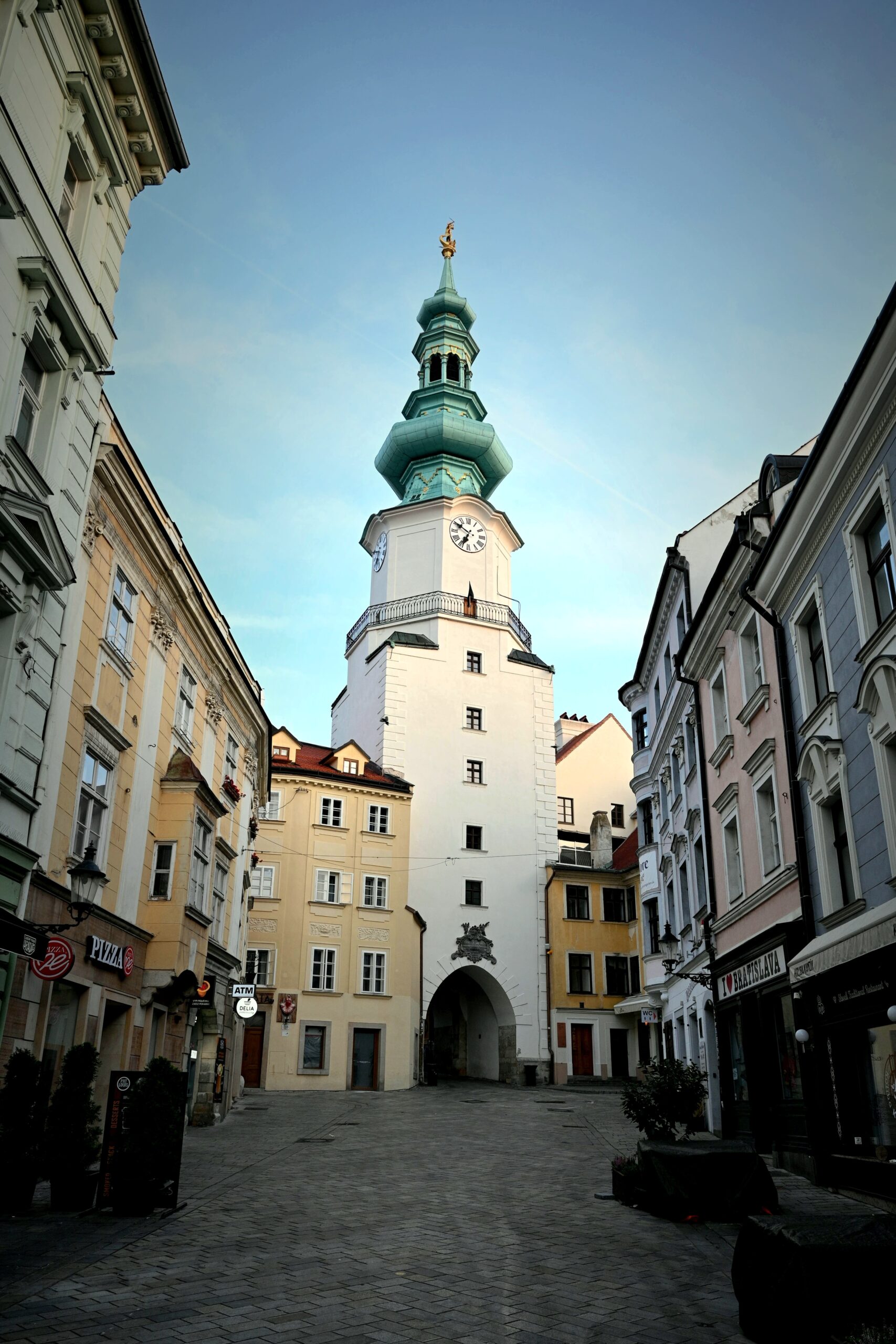
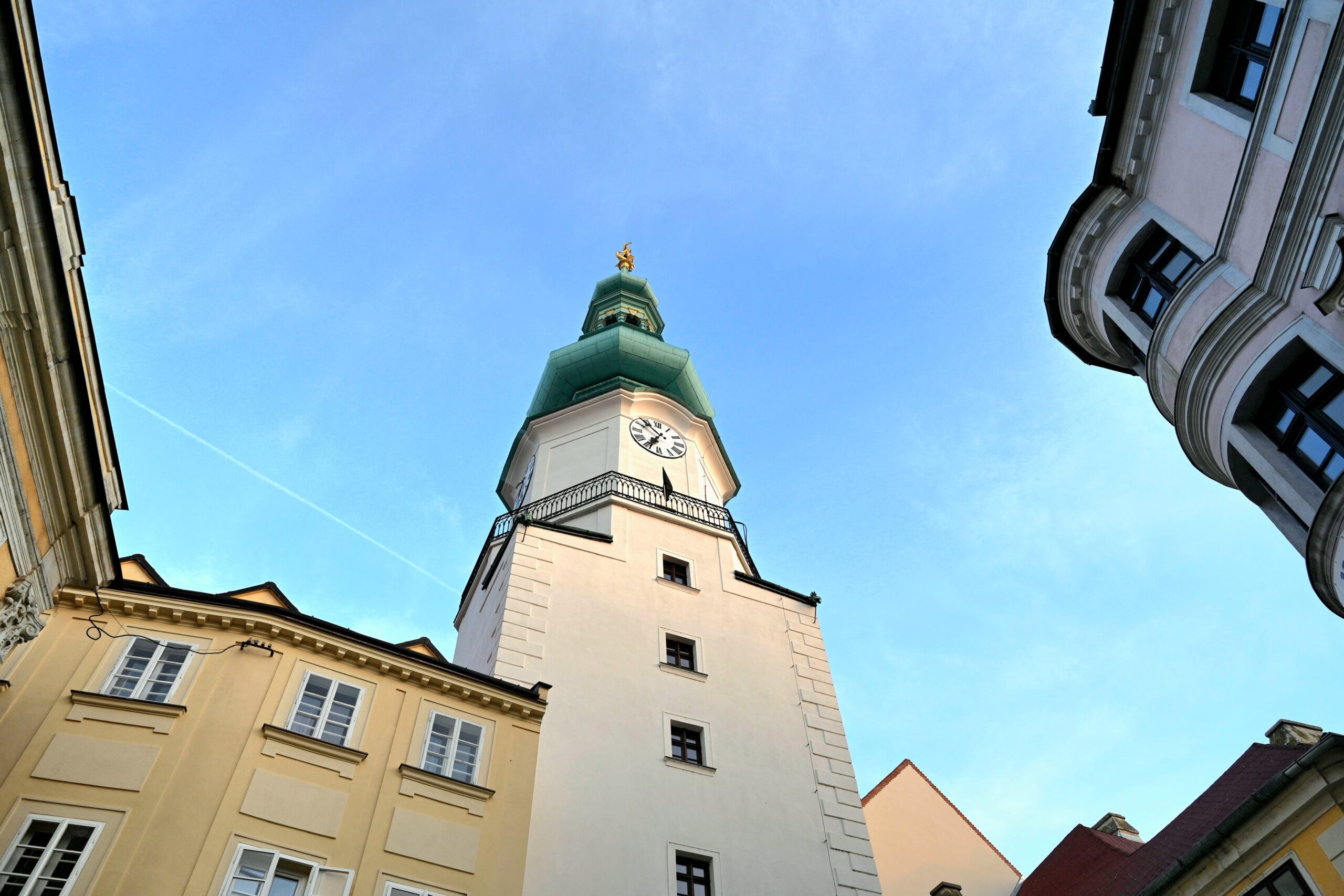
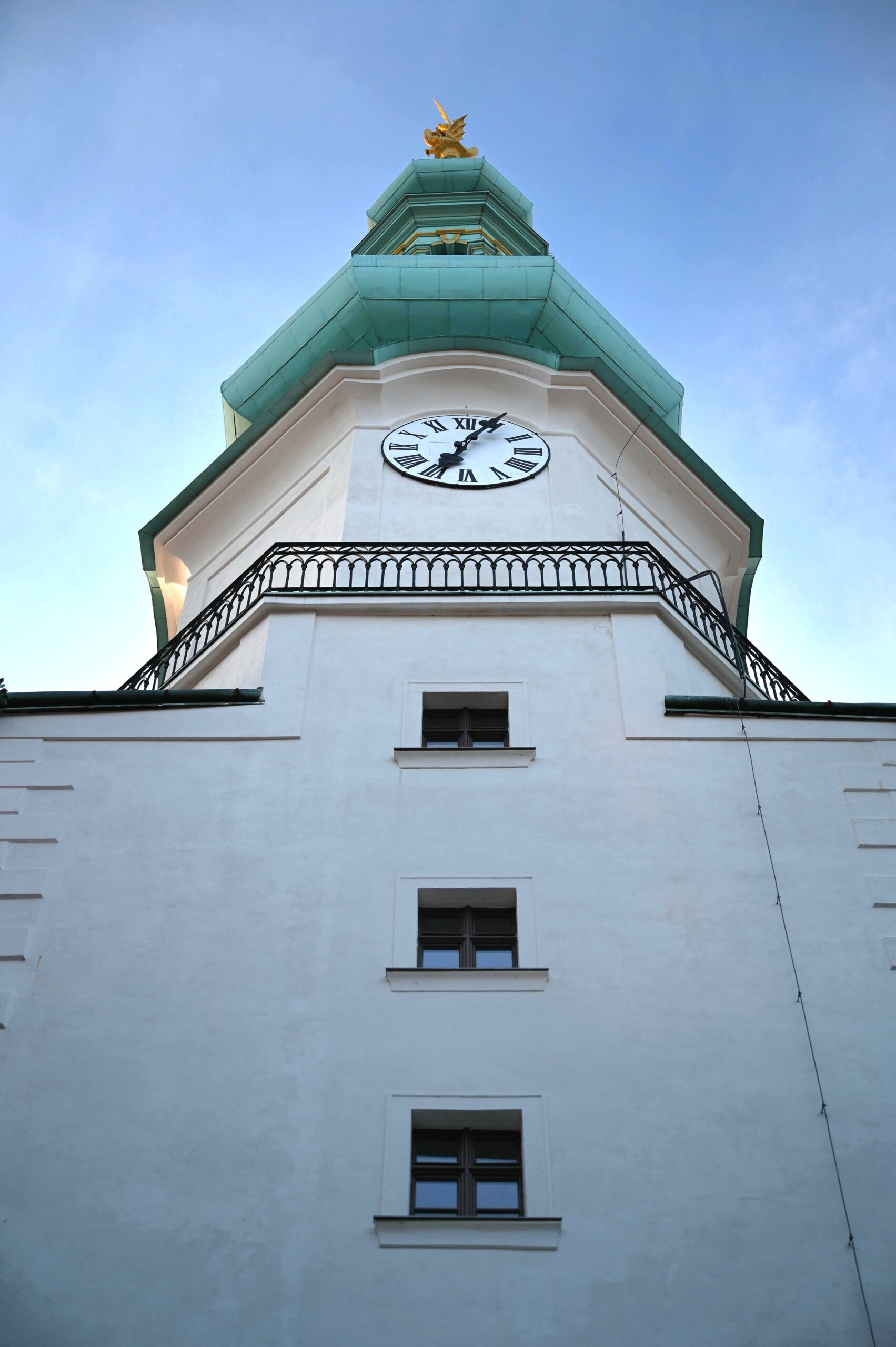
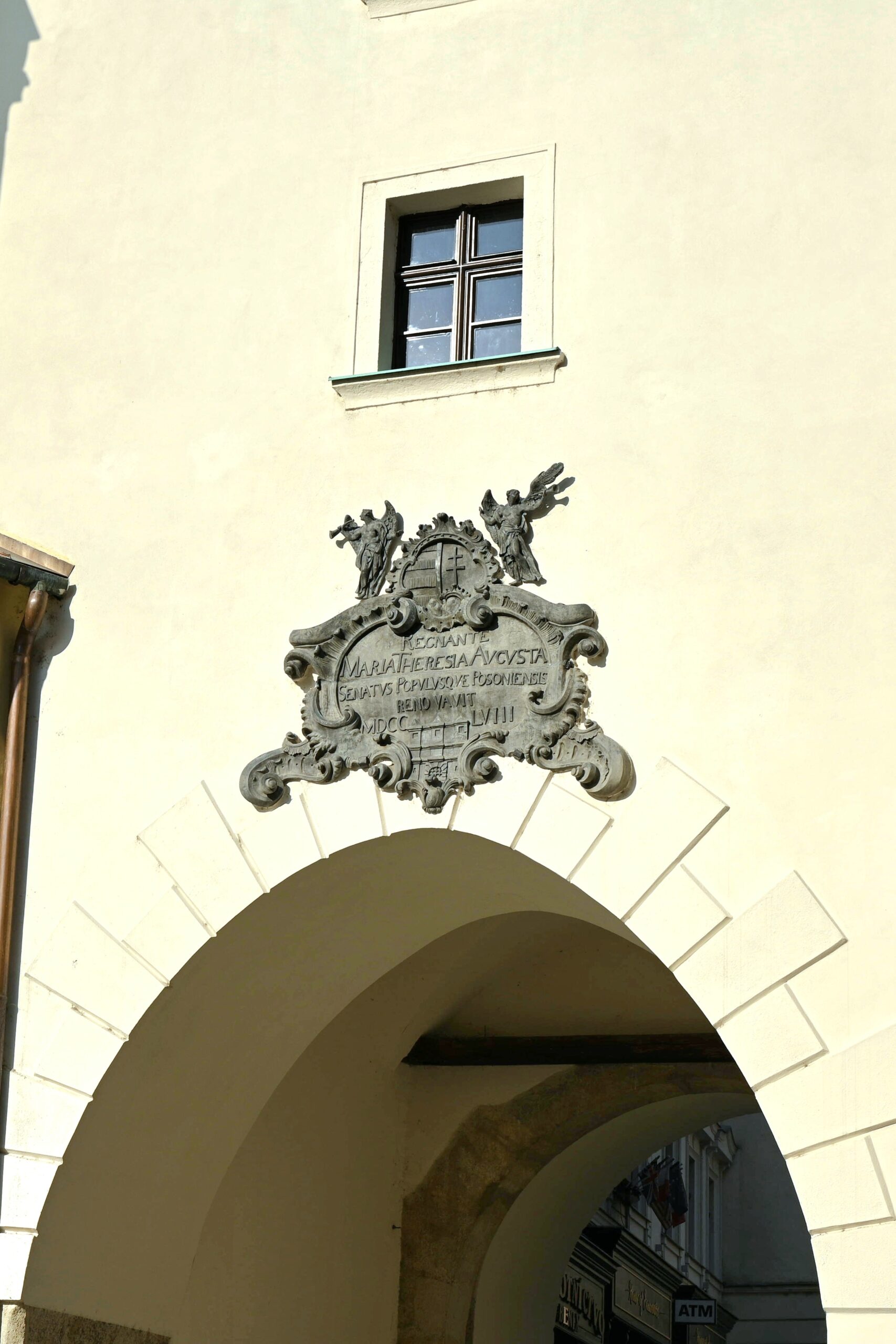
Michael’s Gate remains the only preserved Medieval gate to Bratislava out of the original four. It features a 51 meters-high Michael’s Tower, fragments of a barbican, including a curved street between the tower and the outer gate, as well as a bridge that allowed passage through a fortification ditch.
The origins of the gate’s tower date back to the 13th century. At that time, it provided controlled access to the city through the northern walls ranging from the banks of the Danube river in the south-east to the Castle complex in the west. To strengthen the defence of the gate, a barbican was built in the 15th century. The Michael’s Tower, initially a three-storey high structure, was reinforced, elevated, and decorated in multiple phases throughout the 16th to 18th centuries.
During that period, the gate’s main purpose was to protect the capital city, treasuring the crown jewels, against the Ottoman threat. After the treat faded in the 18th century and the City Walls were torn down, the defensive function of the gate and the tower diminished.
The restoration that took place in 2021-2022 brought back its Baroque glory. Today, the tower houses an exhibition that explains the history, phases of the structural development, defensive and decorative features, as well as interesting facts about the reconstruction of the Michael’s Gate.
Tips
Nearby restaurants
Michael’s Gate is a key entry point to Bratislava’s Old Town where restaurants, pubs, coffee shops and ice cream parlors lure their guests in every corner. Walking down Michalska Street, stop by Urban Bistro and enjoy specialty coffee, snacks and cakes. Further down the road you will find Gatto Matto, a nice Italian restaurant serving very good food for a fair price. Actually, there are two of them, one on Venturska Street and the other on Panska Street. For a more traditional Slovak food, leave the pedestrian zone and head to the iconic Bratislava Flagship Restaurant on the SNP Square, a huge place located in a 17th century Baroque building of the former monastery of the Merciful Brothers. Vegan? Sushi lover? No problem! Welcome to Smak, a small restaurant on Klariska Street. If you want to slow down and relax a bit, enter the Mirbach Palace where you can find Emil, a charming coffee shop offering seating both inside and in an atrium. The building itself houses the Gallery of Bratislava with a nice selection of Gothic and Baroque paintings and sculptures.
Things to do nearby
Well, spend some time wandering the streets and alleys of the Old Town, and grasp the spirit of the place. Every building, every stone has a story, often centuries long. Just walk down Venturska Street: The Steiner Antiquary, established in 1847, selling books even older; The University Library of Bratislava, established in 1919 in the building where the parliament was gathering during the Ottoman occupation of the Kingdom of Hungary; The Academy of Performing Arts, a place where university was established in 1467. Once ready, choose from the list below and explore some of the key sights in the vicinity of the Michael’s Gate.
This 18th century Rococo building has been hosting the Gallery of Bratislava since 1975. Its permanent exhibition installed on the first floor includes beautiful sacred paintings and sculptures, mostly representing Gothic and early Renaissance art. The oldest Medieval artifact, a wooden sculpture of madonna, probably dates back to the 13th century. The second floor features a selection of Central European Baroque art of the 18th century, including Franz Xaver Messerschmidt’s works Capuchin and Character Heads. The palace also houses a nice coffee shop, Emil.
During the Middle Ages, Bratislava’s massive City Walls played an important defensive role. The inner city was only accessible through three main fortified gates, and later a smaller one in the Danube direction. The Michael’s Gate featuring an iconic tower is the only one that survived until today. As the walls’ relevance decreased after the defeat of the Ottoman forces in the 18th century, their large part was destroyed to allow the city’s further expansion. Travel back in time by entering the preserved part of the walls through a bridge connecting it with the Castle Hill, a gate opposite to the St. Martin’s Cathedral, or a passage from Kapitulska Street. The Walls are open every day of the week.
The longest operating church in Bratislava was consecrated on March 27, 1297 A.D. with the presence of king Andrew III. The monastery was attached to it during the 14th century. Through the 16th to 19th centuries, the Franciscan Church witnessed accolades of Knights of the Golden Spur by Hungarian kings coronated in Bratislava’s Saint Martin’s Cathedral. The complex includes architectural and artistic elements of the Gothic, Renaissance, Baroque and Classicist styles. The most beautiful masterpiece is represented by the 14th century marble statue of Pieta. The church and monastery are run by the Franciscan Order until these days.
Originally a Protestant church built in the early 17th century as a place of worship for German immigrants was transferred to the Roman-Catholic Jesuit Order after the suppression of a Protestant coup of 1672. When visiting the church, note the ornate wooden door, as well as the most precious artifact, the black gold-plated Rococo pulpit. Under the building, there is a large crypt that hides the remains of important members of the Jesuit Order who worked and died in Bratislava, including Cardinal Leopold Kolonic. The Holy Saviour Church is located right next to the Old Townhall in the very center of the Old Town.
The seat of the President, originally built in 1760 as the summer residence of Count Grassalkovich, is located just outside the Old Town’s pedestrian zone. While the Grassalkovich Palace is closed to the public due to its official function, the adjacent garden, featuring beautiful flower beds and old trees, remains open free of charge. Renowned for its beauty and tranquility, the garden is a popular spot for walks and relaxation.
The Museum of the Jewish Culture guides you through the history of Jews in this region since the Middle Ages. The artifacts demonstrate the community’s daily life, holidays, and key personalities, as well as the interior design of a synagogue. It also features a commemorative exhibition dedicated to 70,000 victims of the Holocaust from Slovakia. The museum, a specialized body under the Slovak National Museum, is located in a 17th century late-Renaissance mansion built in the Jewish quarter, an area between the inner city and the castle.